
An honors graduate of Princeton University and Georgetown University Law Center, and with many years of experience in large law firm private practice and as a full-time law professor, Keith Fisher joined the St. Thomas University law faculty in August 2025. Previously, he was the Distinguished Fellow and Director of the Institute for Ethics and Professionalism at the National Judicial College.
Professor Fisher is a nationally known expert in several areas, ranging from legal and judicial ethics to domestic and international financial services regulation, anti-corruption, anti-money laundering, and anti-trafficking. He has served as a member of the A.B.A. Standing Committee on Ethics and Professional Responsibility and as Chair of the Professional Responsibility Committee of the A.B.A. Business Law Section. He is currently the Executive Editor for Legal Opinions and Professional Responsibility for Business Law Today and author of the two-volume Lexis-Nexis/Matthew Bender Banking Law Manual, updated semiannually.
His published scholarship has appeared in a wide variety of law reviews and anthologies, and some of his articles have won prizes or honoraria or been cited in judicial opinions. Keith was the principal drafter of the A.B.A.'s amicus curiae briefs (at both the certiorari and merits stages) to the U.S. Supreme Court in Caperton v. Massey Coal Co. (dealing with the due process ramifications of a judge's refusal to recuse). He has assisted the Conference of Chief Justices Professionalism Committee, which focuses on all aspects of bar admissions and regulation of the legal profession, including the regulation of foreign lawyers.
Keith has considerable experience in large law firm practice where, in addition to financial regulatory matters, he worked on Supreme Court and other appellate briefs and oral arguments with E. Barrett Prettyman, Jr. and (now Chief Justice) John Roberts. From 2015 to 2021, he served as Principal Consultant and Senior Counsel for Domestic and International Court Initiatives at the National Center for State Courts, where, among other capacities, he served as counsel to the amicus committee of the Conference of Chief Justices.
Keith's work in Judicial Ethics includes innovative and tailored in-person and virtual ethics trainings for judges at all levels, both across the United States and around the world. Speaking engagements in recent years include the International Conference on Court Excellence in Singapore, the Department of Justice's Professional Responsibility Training Session for U.S. Immigration Judges, an American-Hellenic Chamber of Commerce Symposium on Improving the Greek Court System, the Magistrature de Quebec's Colloque soulignant les 40 ans du Conseil de la magistrature, the U.N.'s Global Judicial Integrity Network, the Konrad Adenauer Stiftung's conference on judicial ethics and social media, and the Judicial Education Institute of Trinidad and Tobago. He has also done anti-corruption training for judges and prosecutors in Suriname and Sri Lanka and has served on the Board of Editors for UNESCO publications on judicial bioethics.
Keith also has a degree in music theory and composition and studied as a child at the Juilliard School of Music in New York. In recent years he has concertized at the Athens Conservatory (where Maria Callas studied) and at the Palacio da Ajuda in Lisbon. In his spare time, he reviews recordings of jazz and classical music for Fanfare magazine. Keith had a leading role in the Franco-Swiss docudrama Cleveland vs. Wall Street, which was selected for the Cannes Film Festival in 2010.
He enjoys racquet sports, is an avid chess and bridge player, and has a love of learning about foreign languages and cultures. He speaks French, Italian, German, Spanish, Greek, and a smattering of Portuguese and Japanese.

A Phi Beta Kappa and Gasson Scholar Honors graduate of Boston College and Suffolk University Law School, Konstantina Vagenas is President and Co-founder of the Judicial Branch Education Academy. She has over twenty-five years of experience as an attorney, starting as a prosecutor in the courts of Essex County, Massachusetts. Her legal career has been focused in the public interest arena and specifically on judicial education and issues affecting the judicial branch and access to justice issues, ranging from judicial independence and the public’s perception of the courts to the underfunding of our state courts. Konstantina has previously served as Director of the ABA Task Force on Preservation of the Justice System, which was co-chaired by Former U.S. Solicitor General Ted Olson and acclaimed trial lawyer David Boies. Subsequently, she served as Director of the Conference of Chief Justices National Task Force on Fines, Fees, and Bail Practices and for the Community Engagement in the State Courts Initiative.
In her role as Director and Chief Counsel of Access to Justice Initiatives at the National Center for State Courts, Ms. Vagenas oversaw national access to justice initiatives, the NCSC Language Access Services Division as well as the Center for Judicial Ethics. She also served as lead staff to the National Center for State Courts Racial Justice Blueprint Initiative Communications and Implementation Working Group. Konstantina also worked at the National Judicial College as Director of Strategic Initiatives and then Director of the Solutions and Innovation Division. Ms. Vagenas was responsible for a diverse portfolio, including working on Advancement and myriad curricular projects in the area of access to justice issues. During her career, she also served as a Political Section intern for the State Department at the American Embassy in Athens, Greece, and later was chosen to serve as a Fellow at Athens College.
Ms. Vagenas co-founded the Judicial Branch Education Academy in 2025. She provides curricular and instructional vision for the organization as it strives to deliver high-quality, focused, and affordable education for judges at all court levels, court professionals, and attorneys. She curates and ensures quality assurance of faculty and educational offerings including the International Judicial Exchange Program. In addition, she is responsible for managing international and national course budgets and handles the organization’s external relations. She continues to dedicate her to career to strengthening professional competence, reinvigorating the joy of learning, and renewing public trust and confidence in the justice system.
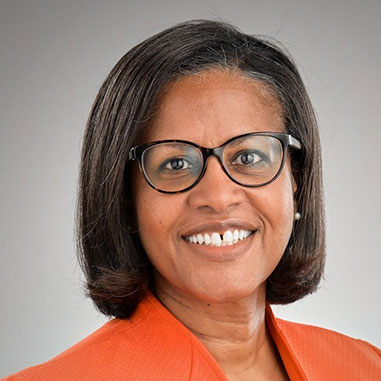
A graduate of Vanderbilt University, Murray State University, and the University of South Carolina School of Law, Tonnya K. Kohn is an attorney, court executive, and legal educator whose career spans judicial administration, law, and media. From 2017 to 2024, she served as State Court Administrator for the South Carolina Judicial Branch, overseeing statewide court operations under the Chief Justice and directing six administrative divisions: Court Education, Fiscal Services, Public Information, Court Services, Human Resources, and Information Technology. Her tenure was marked by future-facing initiatives, including the implementation of digital court reporting, virtual courtrooms, automated judge scheduling, and the launch of the Judicial Branch’s first Court Education Division and Public Information Office. She also led the development of a redesigned Judicial Branch website and introduced electronic sentencing sheets and text notifications for litigants, modernizing access to justice and improving operational efficiency.
Ms. Kohn’s earlier legal experience includes service as a Staff Attorney to the Judicial Branch, judicial law clerk to Circuit Court Judge Clifton B. Newman, and attorney in private practice. Her editorial leadership at The State Media Company and The Virginian-Pilot involved directing newsroom operations during a pivotal era for American journalism. She also worked at the Nashville Banner in Nashville, Tennessee, which is believed to have been one of the first newspapers in the country to launch a webpage, an early signal of her interest in digital innovation and public access.
She has served on numerous boards and committees, including the Conference of State Court Administrators, the South Carolina Commission on Alternate Dispute Resolution, the South Carolina Board of Magistrate and Municipal Judge Certification, and the CCJ-COSCA Blueprint for Racial Justice. From 2020 to 2022, she contributed to the National Judicial Task Force to Examine State Courts’ Response to Mental Illness and chaired the COSCA Language Access Advisory Committee. Her work has consistently bridged legal, operational, and public-facing domains.
In 2025, Ms. Kohn co-founded the Judicial Branch Education Academy (JBEA), where she now serves as Vice President. Through JBEA, she designs and delivers continuing education programs for judges, attorneys, and court professionals across all court levels. Her curriculum development includes courses on court administration, case management, and emerging court issues. She coordinates faculty, manages course budgets, and oversees JBEA infrastructure. Her instructional work reflects a deep understanding of the court’s evolving needs and a dedication to lifelong learning.